 DIPLOMA
Diploma in Design (Furniture and 3D Crafts)
Design a future where artistry meets innovation
 DIPLOMA
Diploma in Design (Interior and Spatial)
Design spaces that inspire and transform
 DIPLOMA
Diploma in Design (Landscape and Architecture)
Be a master of designing built environments with a heart
 DEGREE
Bachelor of Arts (Honours) Biophilic Design
Be part of the change in a design movement inspired by nature, human health and well-being
 DEGREE
Bachelor of Arts (Honours) Design Practice
Navigate the contemporary design landscape with finesse as a leading designer
DIPLOMA IN DESIGN (FURNITURE AND 3D CRAFTS)
Design a future where artistry meets innovation
CRAFT, MATERIALITY, AND FORM
This diploma develops designers through material-led practice, combining handcraft and digital fabrication to create jewellery, lifestyle objects and sculptural forms. Rooted in Southeast Asian heritage and contemporary culture, the programme equips students to design with purpose, market awareness and sustainability — preparing graduates to launch independent brands, contribute to the circular economy, or innovate within the craft and design industries.
This diploma shapes designers who think through materials and express ideas through crafted objects. You will develop a strong understanding of form, craftsmanship, ergonomics, and contemporary making.
1. Graduation Requirements
Diploma Programmes (AY2025 Intake and After)
In order to graduate from a diploma programme, you are required to attain at least 360 credits (including exempted credits and credits for non-graded modules, but excluding credits associated with repeated attempts), and pass all prescribed core and elective requirements with a minimum Grade D for all modules.
2. Mode of Instruction
Lessons may be delivered face-to-face on campus or facilitated online. Lecturers employ a variety of teaching strategies and methods according to the needs of each module. Students are expected to attend every lesson as scheduled, either in the form of lectures, tutorials, discussions, demonstrations, case studies, practical exercises, field activities, classroom practice or e-learning.
3. Assessment Methods
Each module is assessed by either class participation, written assignments, practical performances, portfolio presentations, projects, examinations, or any of these combinations. Assessment methods may vary according to individual module requirements.
4. Career Pathways
Upon the completion of this programme, dynamic careers in the creative industries await:
- 3D Modeller
- 3D Visualiser
- Drafters
- Enamellist
- Entrepreneur
- Furniture Designer
- Gift Designer
- Jewellery Designer
- Makers/Crafters
- Material Specialist
- Merchandise Designer
- Modelmakers
- Object Designer
- Technical Specialist
- Trend Analyst
DIPLOMA IN DESIGN (INTERIOR AND SPATIAL)
Design spaces that inspire and transform
WHERE PEOPLE AND PLACES MEET
This programme focuses on human-centred spatial design that responds to how people live, work and gather. Through studio experimentation and real-world projects, students learn to create immersive, inclusive and emotionally resonant environments while developing a critical understanding of how space influences behaviour, wellbeing and social responsibility in a changing design landscape.
This diploma nurtures designers who shape spaces with intention and insight. You will learn how interiors influence behaviour, culture, and comfort — and how spatial design can enhance everyday living.
1. Graduation Requirements
Diploma Programmes (AY2025 Intake and After)
In order to graduate from a diploma programme, you are required to attain at least 360 credits (including exempted credits and credits for non-graded modules, but excluding credits associated with repeated attempts), and pass all prescribed core and elective requirements with a minimum Grade D for all modules.
2. Mode of Instruction
Lessons may be delivered face-to-face on campus or facilitated online. Lecturers employ a variety of teaching strategies and methods according to the needs of each module. Students are expected to attend every lesson as scheduled, either in the form of lectures, tutorials, discussions, demonstrations, case studies, practical exercises, field activities, classroom practice or e-learning.
3. Assessment Methods
Each module is assessed by either class participation, written assignments, practical performances, portfolio presentations, projects, examinations, or any of these combinations. Assessment methods may vary according to individual module requirements.
4. Career Pathways
Upon the completion of this programme, dynamic careers in the creative industries await:
- Drafter
- Event Planner
- Exhibition Designer
- Interior Designer
- Interior Stylist
- Material Specialist
- Merchandise Buyer
- Project Coordinator
- Retail Designer
- Spatial Designer
- Stylist / Visual Merchandiser
- Trends Analyst
DIPLOMA IN DESIGN (LANDSCAPE AND ARCHITECTURE)
Be a master of designing built environments with a heart
DESIGN ENVIRONMENTS THAT SHAPE HOW WE LIVE
What does it mean to design with nature in mind? This programme develops designers who work with — not against — nature. You will learn to shape resilient green spaces that enhance urban life, from rooftop farms to neighbourhood parks, exploring the interconnections between people, place and ecology. With fieldwork, site analysis and industry collaboration, you’ll build a strong landscape vocabulary while tackling pressing challenges like climate change and biodiversity loss, empowering you to design inclusive outdoor environments that connect communities and honour the natural world.
This diploma builds strong foundations in landscape, urban, and architectural thinking. You will learn to create meaningful outdoor and built environments through ecological awareness, spatial planning, and material exploration.
1. Graduation Requirements
Diploma Programmes (AY2025 Intake and After)
In order to graduate from a diploma programme, you are required to attain at least 360 credits (including exempted credits and credits for non-graded modules, but excluding credits associated with repeated attempts), and pass all prescribed core and elective requirements with a minimum Grade D for all modules.
2. Mode of Instruction
Lessons may be delivered face-to-face on campus or facilitated online. Lecturers employ a variety of teaching strategies and methods according to the needs of each module. Students are expected to attend every lesson as scheduled, either in the form of lectures, tutorials, discussions, demonstrations, case studies, practical exercises, field activities, classroom practice or e-learning.
3. Assessment Methods
Each module is assessed by either class participation, written assignments, practical performances, portfolio presentations, projects, examinations, or any of these combinations. Assessment methods may vary according to individual module requirements.
4. Career Pathways
Upon the completion of this programme, dynamic careers in the creative industries await:
- Drafter
- Educator
- Event Planner
- Horticulturist
- Landscape Designer
- Landscape Project Manager
- Landscape Design Consultant
- Parks and Housing Planner
- Participatory Design Specialist
- Project Coordinator
- Spatial Designer
- Urban Planner
BACHELOR OF ARTS (HONOURS) BIOPHILIC DESIGN
Be part of the change in a design movement inspired by nature, human health and well-being
DESIGN FOR HUMAN WELL-BEING AND THE LIVING WORLD
The first in Asia, this degree bridges the worlds of spatial design and sustainable living. Biophilic Design seeks to harmonise human experience with nature, integrating natural systems, materials and philosophies into built environments that heal, inspire and uplift.
This degree develops designers who integrate nature, sustainability, and human experience into spatial and environment design. You will explore regenerative futures, ecological thinking, and Southeast Asian environmental contexts.
1. UAS Common Curriculum
The UAS Common Curriculum supplements the core curriculum by equipping you with a broader set of proficiencies, empowering you to adapt to evolving professional and industry demands. These non-credit bearing graduation requirements include:
- IN-depth Module – 36 hours
- Career Skills Module – 10 hours
- Industry-Based Learning Module – 10 weeks (approximately 400 hours)
2. Graduation Requirements
In order to graduate from the bachelor's degree programmes and be eligible for the award of a BA (Hons) degree, you must fulfil the following conditions:
- Attain a total of 360 credits, including exempted credits and credits for non-graded modules but excluding credits associated with repeat attempts.
- Attempt and attain a minimum Grade D for all modules.
- Fulfil the non-credit-bearing graduating requirements comprising the UAS Common Curriculum: IN-depth Programme (36 hours), Career Skills (10 hours), and Internship (10 weeks / 400 hours).
- Obtain a minimum CGPA of 2.00 at the end of the programme.
- Complete the programme of study within the stipulated maximum candidature period.
Grade Point
| Letter Grade | Grade Point |
|---|---|
| A+ | 5.0 |
| A | 5.0 |
| A- | 4.5 |
| B+ | 4.0 |
| B | 3.5 |
| B- | 3.0 |
| C+ | 2.5 |
| C | 2.0 |
| D+ | 1.5 |
| D | 1.0 |
| F | 0.0 |
BA (Hons) Classification
| CGPA Range | Classification of Award |
|---|---|
| 4.50 – 5.00 | Honours (Highest Distinction) |
| 4.00 – 4.49 | Honours (Distinction) |
| 3.50 – 3.99 | Honours (Merit) |
| 3.00 – 3.49 | Honours (Commendation) |
| 2.00 – 2.99 | Honours |
| 0.00 – 1.99 | Will not graduate |
Period of Candidature
| Entry | Normal | Maximum |
|---|---|---|
| For entry to Year 1 | 3 years | 6 years |
| For direct entry to Year 2 | 2 years | 4 years |
3. Mode of Instruction
Various learning and teaching methods include technical inductions and workshops, individual or group tutorials and critiques, formative and summative critique sessions by industry experts, group and collaborative projects, interdisciplinary projects, Co-Design Project with industry and institution partners, internship, field trips and visits, masterclasses, independent study, one-to-one tutorial support, online learning, student discussions and presentations, lectures and seminars, studio practice, overseas immersion, professional development, and self and peer assessments.
4. Assessment Methods
Formative and summative assessments across a range of written and practical work are used to monitor and evaluate students’ learning through individual and group presentations, research and evaluative reports, design portfolio, skills and technical exercises, journals, research and process development portfolio, written assignments and proposals, projects, peer assessment and degree show.
5. Career Pathways
Upon the completion of this programme, dynamic careers in the creative industries await:
- Biophilic design specialist (Spatial design related)
- Educational services
- Government organisation (Research and Design Practice)
- Healthcare services
- Horticulture
- Interior design
- Landscape architecture
- Researchers in healthcare-related industry
- Sustainable design strategist
- Spatial design practice
- Urban Design
BACHELOR OF ARTS (HONOURS) DESIGN PRACTICE
Navigate the contemporary design landscape with finesse as a leading designer
EXPAND YOUR CREATIVE IDENTITY. REDEFINE TOMORROW’S DESIGN LANDSCAPE.
Conferred by the University of the Arts Singapore*, the Bachelor of Arts (Honours) Design Practice is designed for bold thinkers who are ready to shape the future through design. You will develop the creative, technical and critical skills to create purposeful solutions that respond to people, culture and the evolving needs of society.
Specialise in one of four design domains—3-Dimensional, Communication, Fashion or Spatial Design—while learning in a collaborative studio environment that combines disciplinary depth with cross-disciplinary exchange. Through studio-based practice, research and industry projects, you will learn to critically examine contemporary challenges, translate ideas into meaningful impact, and develop the adaptability to thrive in an evolving design landscape.
Gain global exposure through a five-week international placement in your second year or apply for a semester-long exchange at a partner university. Together with real-world industry collaborations, these experiences will broaden your global outlook, strengthen your professional and entrepreneurial capabilities, and prepare you to pursue diverse careers within and beyond the creative industries.
*Students entering the programme in Year 1 of August 2027 intake will graduate with a degree conferred by the University of the Arts Singapore. Students granted direct entry into Year 2 of August 2027 intake will graduate with a degree conferred by the University of the Arts London.
1. UAS Common Curriculum
The UAS Common Curriculum supplements the core curriculum by equipping you with a broader set of proficiencies, empowering you to adapt to evolving professional and industry demands. These non-credit bearing graduation requirements include:
- IN-depth Module – 36 hours
- Career Skills Module – 10 hours
- Industry-Based Learning Module – 10 weeks (approximately 400 hours)
2. Graduation Requirements
In order to graduate from the bachelor's degree programmes and be eligible for the award of a BA (Hons) degree, you must fulfil the following conditions:
- Attain a total of 360 credits, including exempted credits and credits for non-graded modules but excluding credits associated with repeat attempts.
- Attempt and attain a minimum Grade D for all modules.
- Fulfil the non-credit-bearing graduating requirements comprising the UAS Common Curriculum: IN-depth Programme (36 hours), Career Skills (10 hours), and Internship (10 weeks / 400 hours).
- Obtain a minimum CGPA of 2.00 at the end of the programme.
- Complete the programme of study within the stipulated maximum candidature period.
Grade Point
| Letter Grade | Grade Point |
|---|---|
| A+ | 5.0 |
| A | 5.0 |
| A- | 4.5 |
| B+ | 4.0 |
| B | 3.5 |
| B- | 3.0 |
| C+ | 2.5 |
| C | 2.0 |
| D+ | 1.5 |
| D | 1.0 |
| F | 0.0 |
BA (Hons) Classification
| CGPA Range | Classification of Award |
|---|---|
| 4.50 – 5.00 | Honours (Highest Distinction) |
| 4.00 – 4.49 | Honours (Distinction) |
| 3.50 – 3.99 | Honours (Merit) |
| 3.00 – 3.49 | Honours (Commendation) |
| 2.00 – 2.99 | Honours |
| 0.00 – 1.99 | Will not graduate |
Period of Candidature
| Entry | Normal | Maximum |
|---|---|---|
| For entry to Year 1 | 3 years | 6 years |
| For direct entry to Year 2 | 2 years | 4 years |
3. Mode of Instruction
Lessons may be delivered face-to-face on campus or facilitated online. Lecturers employ a variety of teaching strategies and methods according to the needs of each module. Students are expected to attend every lesson as scheduled, either in the form of lectures, tutorials, discussions, demonstrations, case studies, practical exercises/classes, seminars, workshops, rehearsals, productions, laboratory/studio-based practice, screenings, field activities or e-learning/web-based interactions, which vary depending on the programme.
4. Assessment Methods
Each module is assessed by either class participation, written assignments, coursework, practical activities, performances, portfolio, oral presentations, peer reviews, projects, examinations, or any of these combinations which vary depending on the programme. Assessment methods may vary according to individual module requirements.
5. Career Pathways
Graduates of the BA (Hons) Design Practice programme are well-equipped with the necessary skills and mindset to thrive across diverse domains within the dynamic and evolving design industry. These opportunities extend beyond traditional design roles, offering students the chance to venture into exciting areas such as:
- Interdisciplinary Designer or Multidisciplinary Designer
- Content Creator
- Content Writer
- Creative Entrepreneur
- Creative Technologist
- Design Educator
- Design Facilitator
- Design Futurist
- Design Researcher
- Design Strategist
- Digital Designer
- Innovation Consultant
- Project Manager
- Service / CX / UIUX Designer
 DIPLOMA
Diploma in Arts Management
Learn to excel in the world of arts management
DIPLOMA IN ARTS MANAGEMENT
Learn to excel in the world of arts management
WHERE CREATIVE VISION BECOMES CULTURAL IMPACT
This practice-led diploma prepares you for the real work of the arts — where creativity meets organisation, and vision becomes action. You’ll gain a broad foundation in how cultural projects are conceived, managed, and delivered, learning to support artists, engage audiences, and sustain creative initiatives across performances, exhibitions, festivals, and community programmes.
Designed for those who care deeply about the arts and want to shape how they are experienced, this diploma develops adaptable thinkers who can move confidently across disciplines and sectors.
Read The Straits Times feature on our transformative programme.
Source: The Straits Times © SPH Media Limited. Permission required for reproduction1. Graduation Requirements
Diploma Programmes (AY2025 Intake and After)
In order to graduate from a diploma programme, you are required to attain at least 360 credits (including exempted credits and credits for non-graded modules, but excluding credits associated with repeated attempts), and pass all prescribed core and elective requirements with a minimum Grade D for all modules.
2. Mode of Instruction
Lessons may be delivered face-to-face on campus or facilitated online. Lecturers employ a variety of teaching strategies and methods according to the needs of each module. Students are expected to attend every lesson as scheduled, either in the form of lectures, tutorials, discussions, demonstrations, case studies, practical exercises, field activities, classroom practice or e-learning.
3. Assessment Methods
Each module is assessed by either class participation, written assignments, practical performances, portfolio presentations, projects, examinations, or any of these combinations. Assessment methods may vary according to individual module requirements.
4. Career Pathways
NAFA’s Diploma in Arts Management prepares students for a wide range of possible careers. Graduates can look forward to careers in arts and non-arts sectors such as performing and visual arts, heritage and museums, events and entertainment, government and corporate.
The broad-based and interdisciplinary training provided in the diploma programme develops versatile graduates who are able to perform work tasks ranging from management of arts productions, community events and projects, to marketing, audience development and administration as well as technical work such as sound, lighting and stage management, and more.
List of Careers
Diploma graduates can look forward to entry level positions in arts companies, arts venues, cultural organisations and corporations such as:
- Arts Administrator / General Administrator
- Arts Marketing and Public Relations officer
- Audience Development and Outreach activities facilitator / coordinator
- Arts Programming assistant
- Community Arts events facilitator / coordinator
- Events and Project coordinator
- Arts Festival / Art Fair assistant
- Artist manager
- Front of House officer
- Museums and Heritage officer
- Art Exhibition designer and crew
- Stage Manager / Assistant Stage Manager
- Production Assistant
- Lighting technician / crew
- Sound technician / crew
- Arts Education assistant
- Arts Researcher and Writer
- Customer Service officer
- Arts Venues manager
* Arts companies refer to dance, music and theatre companies, art galleries, auction houses and arts enrichment centers.
** Arts venues refer to arts spaces such as arts centres (Esplanade, the Star, etc), theatre spaces, concert halls, public and community spaces.
*** Cultural organisations refer to both government and non-government organisations such as NAC, NHB, MCCY (government) and museums, cultural centres (non-government).
**** Corporations include SMEs, MNCs, Financial Institutions, Hospitality, Charities and Foundations.
 DIPLOMA
Diploma in Dance
Dance your way to the top of the world
 DEGREE
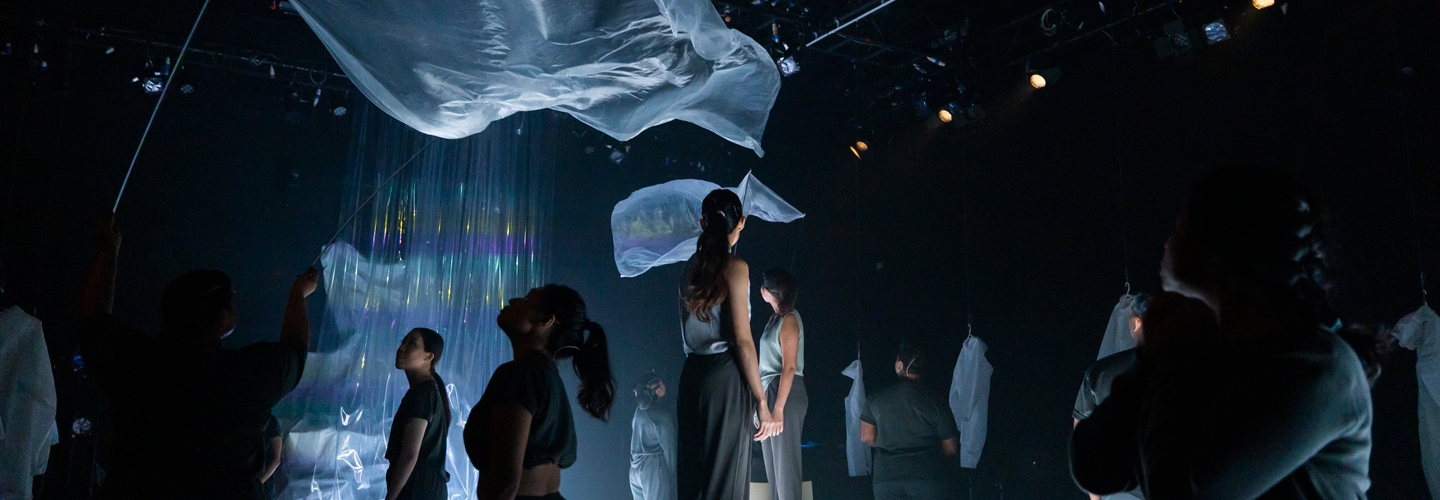
Bachelor of Arts (Honours) Performance Making
Take a bold step towards the performance of your lifetime

Diploma in Design Communication and Strategy

Diploma in Digital Illustration and Narrative
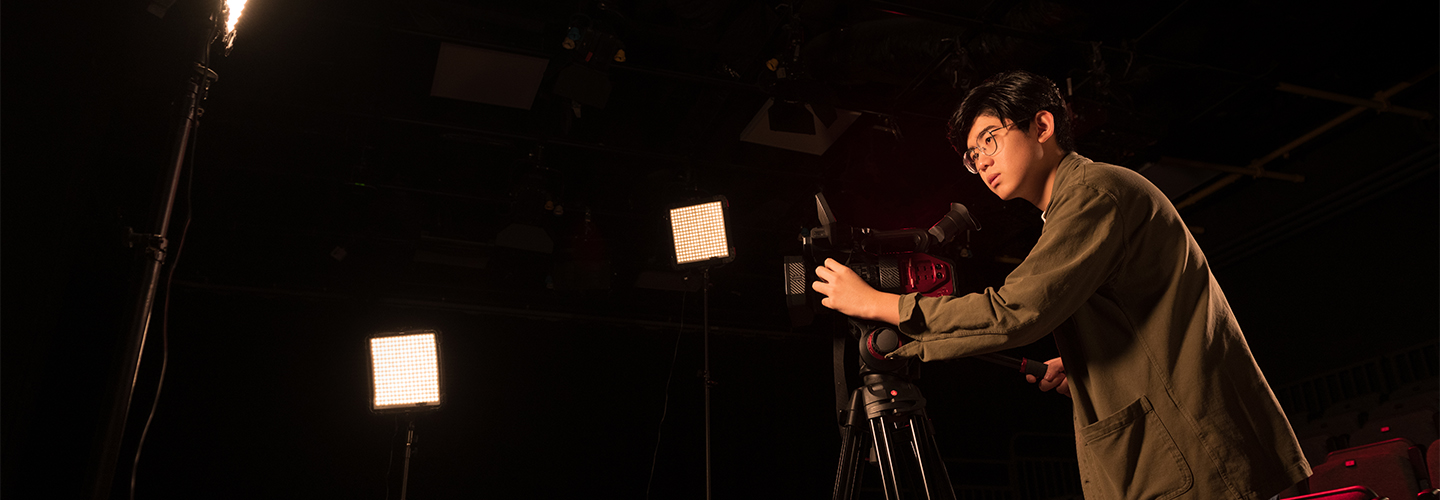
Diploma in Media Experience and Innovation
Bachelor of Arts (Honours) Design Practice

Diploma in Fashion
Bachelor of Arts (Honours) Design Practice
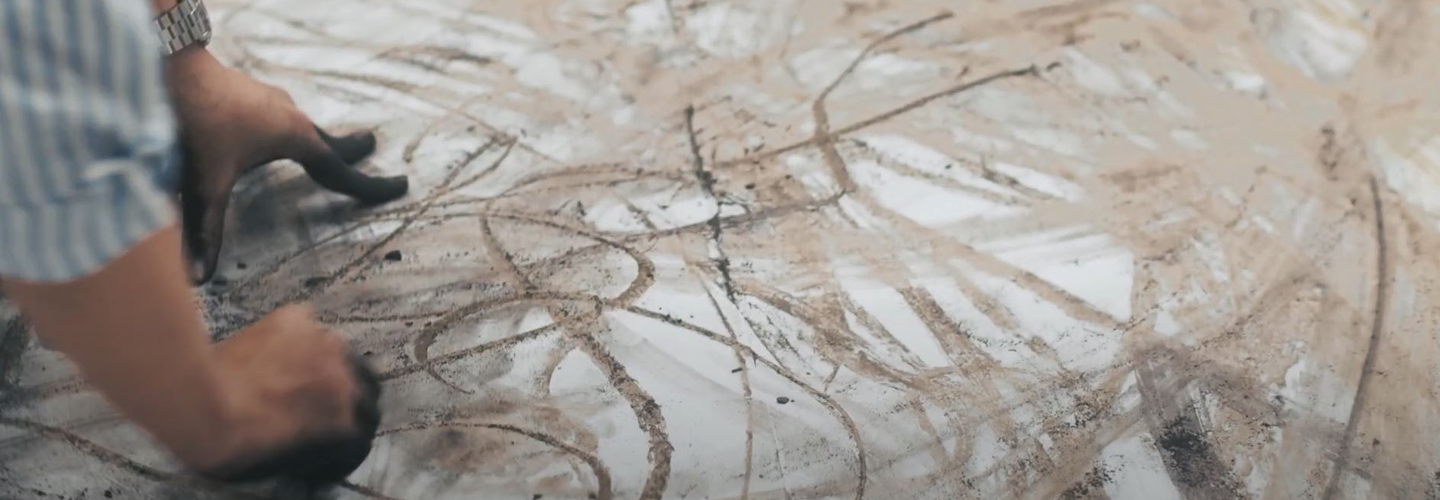
Diploma in Fine Art
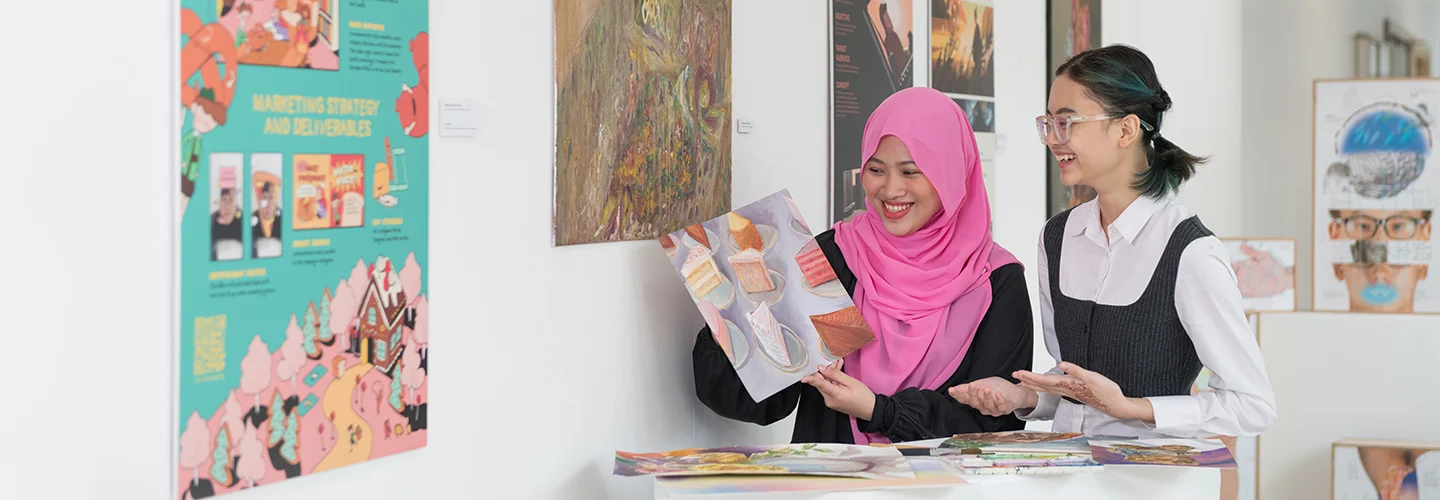
Diploma in Art Teaching
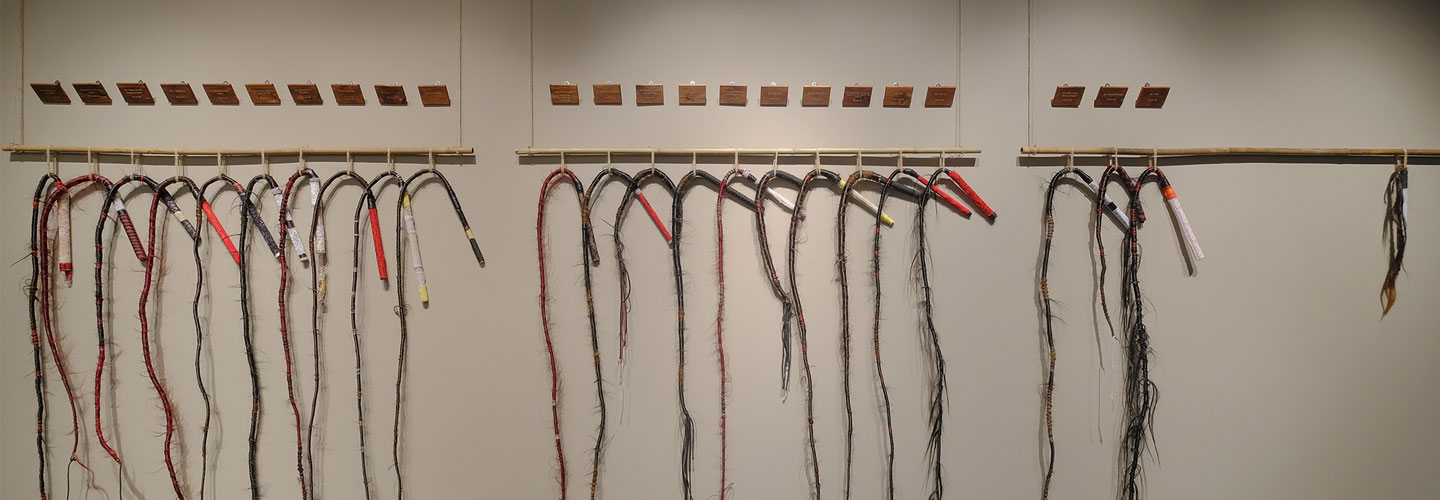
Bachelor of Arts (Honours) Fine Art
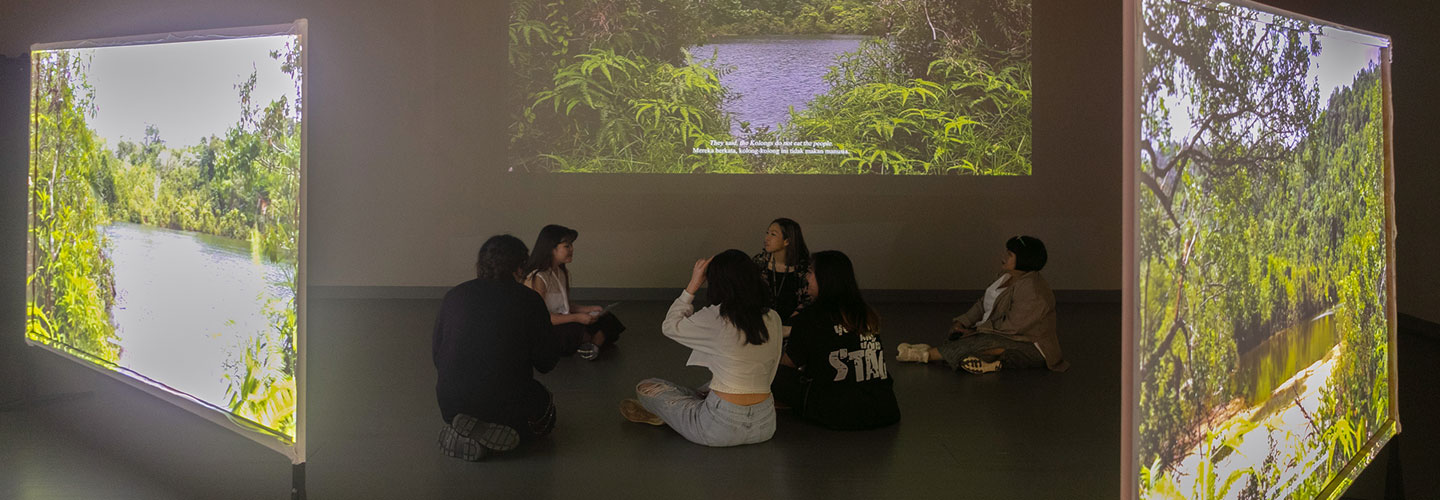
Master of Fine Arts Fine Art
DEGREE
Bachelor of Arts (Honours) Design Practice
Navigate the contemporary design landscape with finesse as a leading designer
DEGREE
Bachelor of Arts (Honours) Performance Making
Shape the future of performance through interdisciplinary practice, collaboration and creative exploration
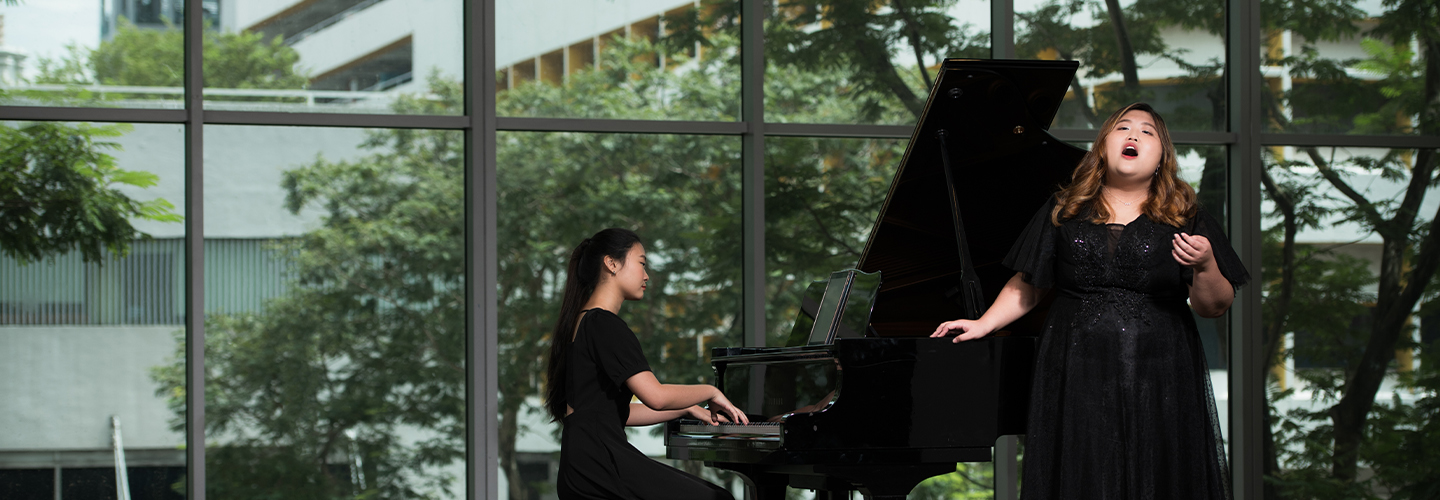 Diploma
 in Music
Build the versatility and confidence to carve out your career as a performer or composer.
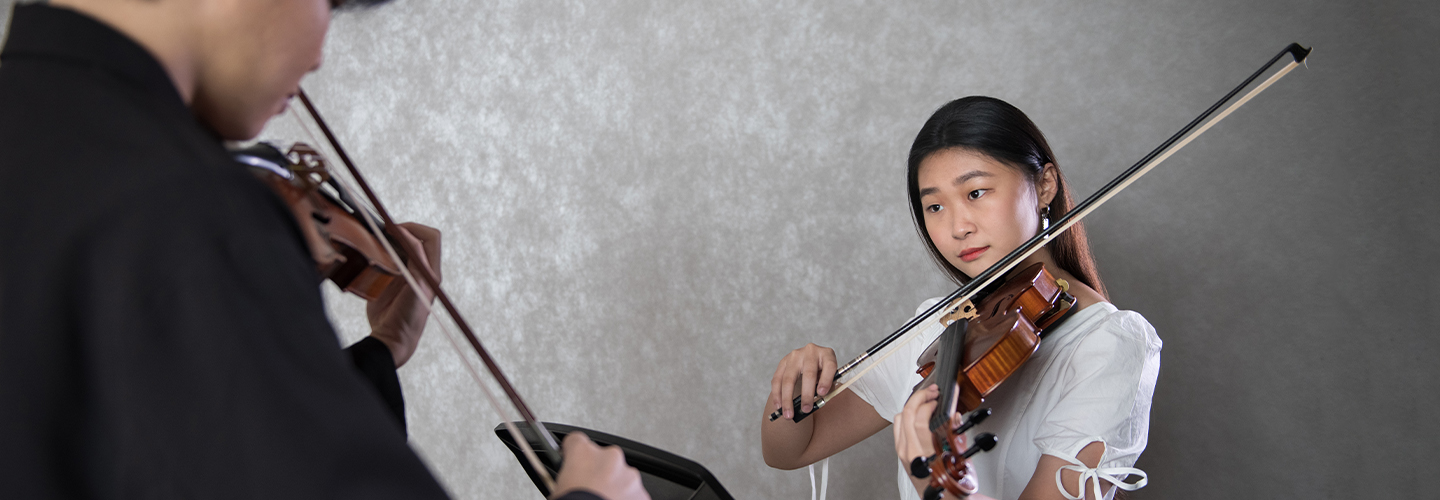 Diploma
 in Music Teaching
Build a solid foundation in both music and teaching and guide the next generation of musicians.
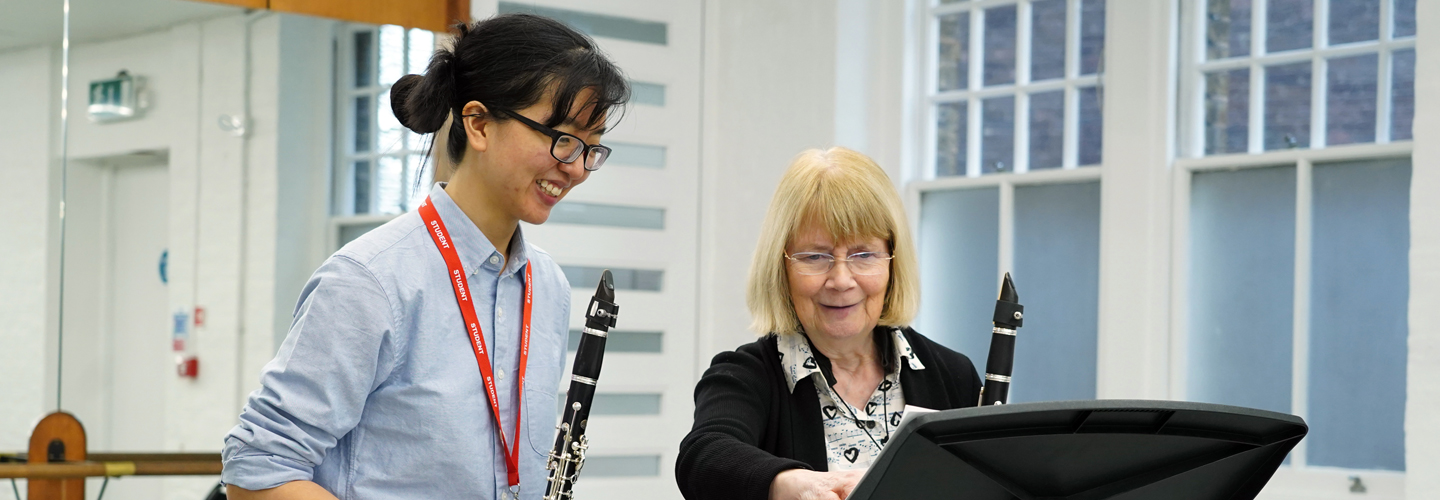 Degree
Bachelor of Education (Honours) in Instrumental & Vocal Teaching
Shape the learning pathways for future musicians through performance, pedagogy and professional practice.
 Degree
Bachelor of Music (Honours)
Redefining musical excellence and leadership in a future-ready conservatoire.
 Master
 of Composition (Teach Out by July 2027)
Develop your skills with confidence to achieve excellence in your compositions.
 Master
 of Performance
Advancing artistic mastery and leadership for a changing musical world.
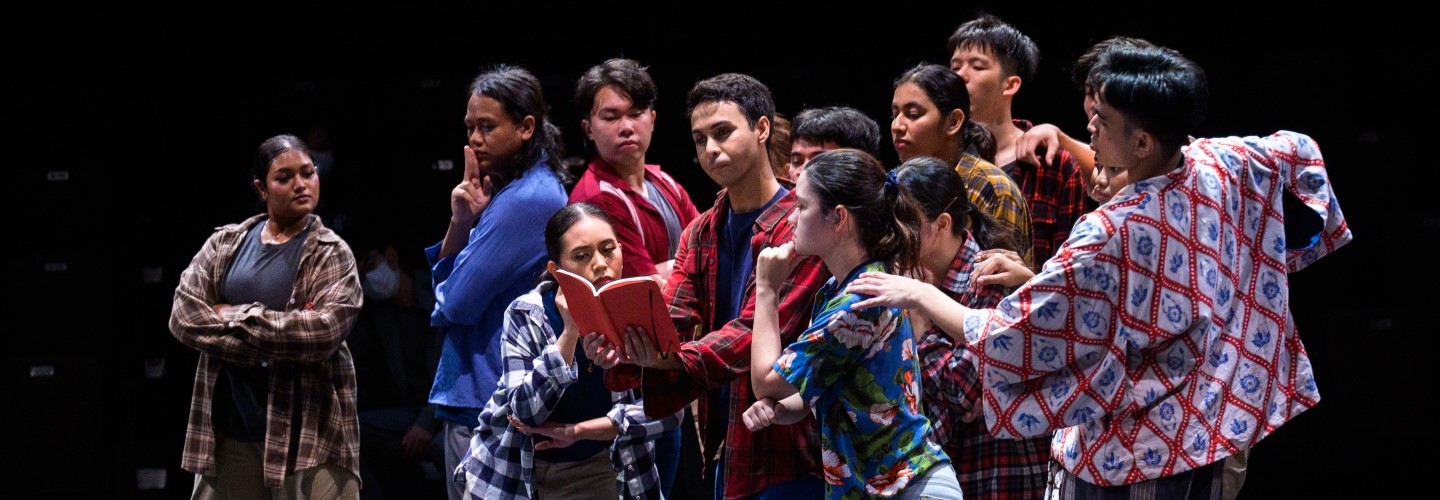 Diploma
 in Theatre (English Drama)
Be the theatre show-stopper you were meant to be.
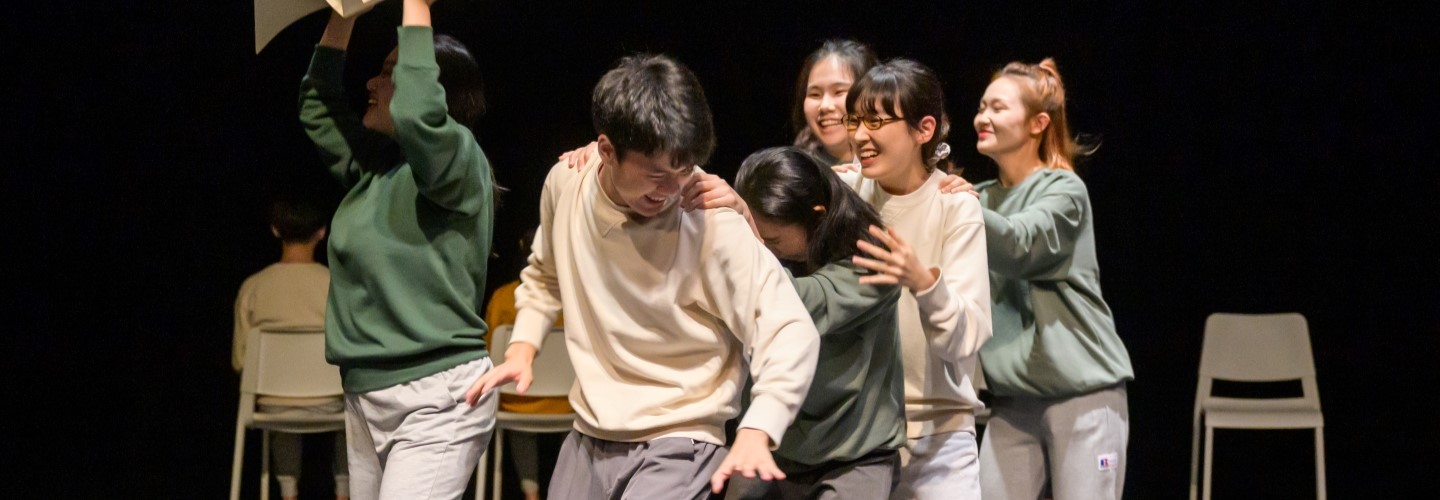 Diploma
 in Theatre (Mandarin Drama)
Be the theatre show-stopper you were meant to be.
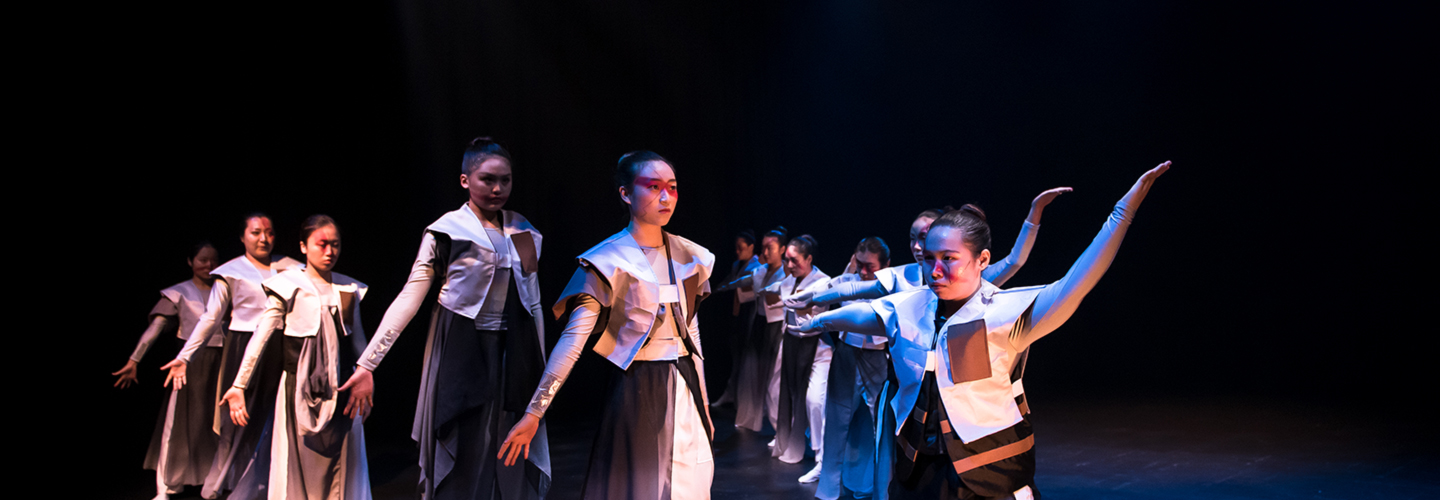 Degree
Bachelor of Arts (Honours) Contemporary Chinese Theatres
Become a performer and creator with cultural and artistic sensitivity.
Degree
Bachelor of Arts (Honours) Performance Making
Develop your creative voice through interdisciplinary performance-making.
Diploma in Theatre
(English Drama)
Be the theatre show-stopper you were meant to be
Shape Stories. Shape Audiences. Shape Yourself.
This three-year diploma cultivates confident and versatile actors ready to take on diverse roles in contemporary theatre practice. Through rigorous training in acting, voice, movement, devising, directing, dramaturgy, stagecraft and collaborative creation, you will develop strong foundations while learning to craft stories that speak to diverse audiences and reflect the world we live in. Students are also introduced to applied theatre and community engagement, broadening their understanding of performance beyond the stage. Both the English Drama and Mandarin Drama pathways offer mentorships and industry collaborations, with companies such as Nine Years Theatre and The Finger Players enriching students’ experience through real-world productions and professional exposure. Graduates leave not only as performers, but as thoughtful collaborators ready for stage, screen and beyond.
More Information
1. Graduation Requirements
Diploma Programmes (AY2025 Intake and After)
In order to graduate from a diploma programme, you are required to attain at least 360 credits (including exempted credits and credits for non-graded modules, but excluding credits associated with repeated attempts), and pass all prescribed core and elective requirements with a minimum Grade D for all modules.
2. Mode of Instruction
Lessons may be delivered face-to-face on campus or facilitated online. Lecturers employ a variety of teaching strategies and methods according to the needs of each module. Students are expected to attend every lesson as scheduled, either in the form of lectures, tutorials, discussions, demonstrations, case studies, practical exercises, field activities, classroom practice or e-learning.
3. Assessment Methods
Each module is assessed by either class participation, written assignments, practical performances, portfolio presentations, projects, examinations, or any of these combinations. Assessment methods may vary according to individual module requirements.
4. Career Pathways
The course trains young professionals for entry levels of these roles in the performing arts, arts administration and theatre industries:
- Applied theatre practitioner
- Theatre director
- Theatre maker
- Actor
- TV writer
- Film writer
- Playwright
- Arts journalist
- Theatre administrator
- Drama Teacher/Instructor
- Arts Education Coordinator
- Production Manager
- Casting Director
- Theatre Critic
Diploma in Theatre
(Mandarin Drama)
Be the theatre show-stopper you were meant to be
Claim Your Voice. Train in Mandarin.
This three-year diploma offers specialised training in Mandarin theatre within Singapore’s unique bilingual and multicultural context. As the only programme of its kind in Singapore, it places Chinese performing arts at its core while engaging with contemporary practices and global perspectives. You will build strong foundations in acting, voice, movement, text analysis, and stagecraft, while exploring the cultural, philosophical, and aesthetic traditions that shape Mandarin performance.
Training is rigorous, collaborative, and industry-relevant — equipping you to devise original work, teach, and engage communities across both Mandarin-speaking and non-Mandarin performance scenes. Through professional attachments and festival platforms, you’ll work alongside companies such as Nine Years Theatre, Toy Factory, and The Finger Players, and deepen your intercultural practice through an overseas immersion with the Indonesian Institute of the Arts Yogyakarta. Graduates emerge as confident and versatile theatre practitioners — ready to perform, create, and contribute meaningfully as actors, directors, stage managers, and creative leaders across multilingual and multicultural stages.
More Information
1. Graduation Requirements
Diploma Programmes (AY2025 Intake and After)
In order to graduate from a diploma programme, you are required to attain at least 360 credits (including exempted credits and credits for non-graded modules, but excluding credits associated with repeated attempts), and pass all prescribed core and elective requirements with a minimum Grade D for all modules.
2. Mode of Instruction
Lessons may be delivered face-to-face on campus or facilitated online. Lecturers employ a variety of teaching strategies and methods according to the needs of each module. Students are expected to attend every lesson as scheduled, either in the form of lectures, tutorials, discussions, demonstrations, case studies, practical exercises, field activities, classroom practice or e-learning.
3. Assessment Methods
Each module is assessed by either class participation, written assignments, practical performances, portfolio presentations, projects, examinations, or any of these combinations. Assessment methods may vary according to individual module requirements.
4. Career Pathways
The course trains young professionals for entry levels of these roles in the performing arts, arts administration and theatre industries:
- Applied theatre practitioner
- Theatre director
- Theatre maker
- Actor
- TV writer
- Film writer
- Playwright
- Arts journalist
- Theatre administrator
- Drama Teacher/Instructor
- Arts Education Coordinator
- Production Manager
- Casting Director
- Theatre Critic
Bachelor of Arts
(Honours)
Contemporary
Chinese Theatres
Become a performer and creator with cultural and artistic sensitivity
This pioneering honours degree focuses on contemporary Chinese theatre within Singapore’s multicultural and bilingual context, grounding students in both its historical depth and contemporary possibilities. You will engage deeply with Mandarin-language performance while integrating xiqu training, tai chi, martial arts, and traditional storytelling into contemporary theatre-making.
Emphasising devising, dramaturgy, playwriting, directing, research, and digital practices, the programme develops theatre-makers — not just actors — who can create original work for today’s global audiences. Through international placements, cross-cultural exchange, and mentorship by established practitioners, graduates cultivate a critical and creative practice suited to multilingual and intercultural performance environments.
More Information
1. UAS Common Curriculum
The UAS Common Curriculum supplements the core curriculum by equipping you with a broader set of proficiencies, empowering you to adapt to evolving professional and industry demands. These non-credit bearing graduation requirements include:
- IN-depth Module – 36 hours
- Career Skills Module – 10 hours
- Industry-Based Learning Module – 10 weeks (approximately 400 hours)
2. Graduation Requirements
In order to graduate from the bachelor's degree programmes and be eligible for the award of a BA (Hons) degree, you must fulfil the following conditions:
- Attain a total of 360 credits, including exempted credits and credits for non-graded modules but excluding credits associated with repeated attempts.
- Attempt and attain a minimum Grade D for all modules.
- Fulfil the non-credit-bearing graduating requirements comprising the UAS Common Curriculum: IN-depth Programme (36 hours), Career Skills (10 hours), and Internship (10 weeks / 400 hours).
- Obtain a minimum CGPA of 2.00 at the end of the programme.
- Complete the programme of study within the stipulated maximum candidature period.
If you have been admitted via direct entry into your second year, 120 credits will be exempted for your first year and you are required to attain the remaining 240 credits – 120 credits for your second year and 120 credits for your third year.
| Letter Grade | Grade Point |
|---|---|
| A+ | 5.0 |
| A | 5.0 |
| A- | 4.5 |
| B+ | 4.0 |
| B | 3.5 |
| B- | 3.0 |
| C+ | 2.5 |
| C | 2.0 |
| D+ | 1.5 |
| D | 1.0 |
| F | 0.0 |
Bachelor of Arts
(Honours)
Performance Making
Performance Making
This interdisciplinary programme develops contemporary performance-makers through practice, collaboration, experimentation and critical inquiry.
You will explore performance across disciplines and contexts while developing an independent creative practice that responds to the evolving landscape of contemporary performance.
More Information
1. UAS Common Curriculum
The UAS Common Curriculum supplements the core curriculum by equipping you with a broader set of proficiencies, empowering you to adapt to evolving professional and industry demands. These non-credit bearing graduation requirements include:
- IN-depth Module – 36 hours
- Career Skills Module – 10 hours
- Industry-Based Learning Module – 10 weeks (approximately 400 hours)
2. Graduation Requirements
In order to graduate from the bachelor's degree programme and be eligible for the award of a BA (Hons) degree, you must fulfil the prescribed academic and graduation requirements.
Students are required to complete the programme within the stipulated maximum candidature period and fulfil the UAS Common Curriculum requirements.
3. Mode of Instruction
Learning takes place through a combination of studio practice, workshops, seminars, collaborative projects, independent exploration, production and performance activities.
4. Assessment Methods
Assessment may include practical projects, performances, presentations, written work, reflective documentation, collaborative projects and portfolio submissions.
5. Career Pathways
- Performance Maker
- Performer
- Director
- Creative Practitioner
- Producer
- Arts Educator
- Interdisciplinary Artist